
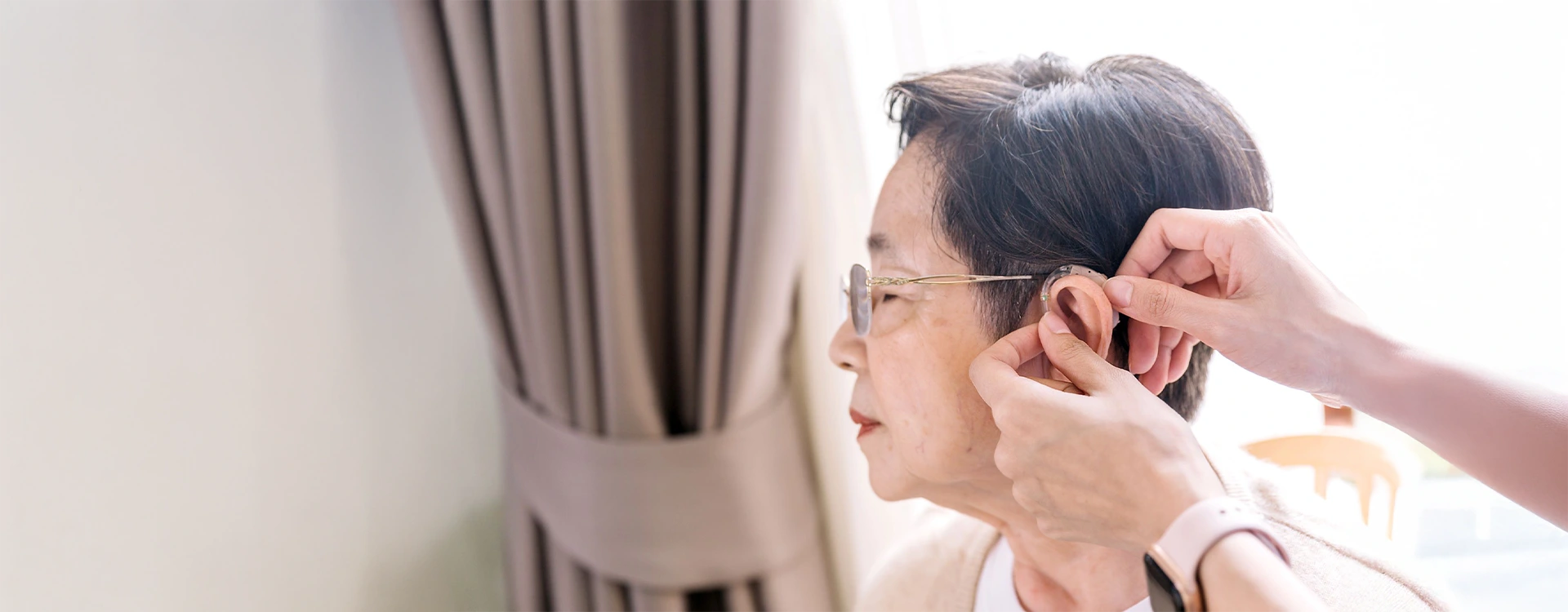

How to Talk to a Loved One About Hearing Loss

A loved one who keeps turning up the television, asking people to repeat themselves or quietly avoiding family meals is often the last person to think there’s anything wrong with their hearing. This is one of the common reasons that hearing loss goes untreated for years.
The signs are visible to the people around them, but the conversation that would lead to a hearing test often feels too sensitive to start.
Why This Conversation Feels So Difficult
What makes this conversation hard is not the topic so much as what it implies. Even when raised gently, it tends to land as "You are getting old" or "Something is wrong with you." That gap between what you mean and what your loved one hears is often why the conversation gets put off.
Why Your Loved One Might Be in Denial
Denial is rarely about stubbornness. It’s usually a mix of how hearing loss develops and what hearing aids still represent for many people.
- Gradual onset: Adult hearing loss develops over years, not months. The brain adapts to small changes as they occur, which means the affected person may genuinely not realize how much speech clarity they are missing. The early warning signs of hearing loss are generally easier for someone else to see.
- Stigma: Hearing aids are still wrongly associated with old age and frailty. An active, engaged senior often resists the label more than the device itself. Today, many hearing aids for senior citizens are small enough to sit inside the ear canal, which enlightens the conversation.
- Cost and visibility: Unspoken concerns about expense, or about wearing something behind the ear, often sit underneath a flat refusal to discuss the topic.
- Pride and independence: Admitting to a problem can feel like an admission of decline. For many people, that’s harder than the daily effort of working around the hearing itself.
The Quiet Signs You're Probably Already Seeing
By the time a family member starts looking up how to have this conversation, the hearing loss symptoms have usually been visible for a while. The signs of hearing loss in elderly parents and spouses tend to be recognizable once you know what to look for:
- Television and radio volume: A noticeable need to raise the volume above what others find comfortable.
- Frequent requests to repeat: Asking for repetition, or answering a question that was close to but not quite the one asked.
- Difficulty in noisy places: Restaurants, hawker centres and family gatherings become tiring rather than enjoyable.
- Withdrawing from groups: Phone calls get shorter, and the affected person increasingly opts out of social events.
- Tiredness after conversations: A flat, drained mood after socializing.
The pattern often points to high-frequency hearing loss, which affects the consonants in speech first. The way high-frequency hearing loss actually sounds is different from what the listener expects, which is part of why the affected person may not recognize what they are missing.
Approaching the Conversation with Care
Choosing the Right Moment
The worst moment is the one immediately after a misunderstanding. Frustration in front of others or after a missed question tends to land as criticism rather than concern. A calm, private moment gives the exchange a chance to turn into a discussion rather than a confrontation.
What to Say (and What to Leave Out)
Lead with how the situation affects you, not with what’s wrong with them. For instance, "I have noticed I’m repeating myself more lately, and I want to find a way for both of us to feel less frustrated" lands much better than "I think you cannot hear properly anymore."
Avoid loaded words like “deaf” or “old”, or framing the conversation around their hearing loss. Share that the change is affecting the relationship, not the person, and leave space for them to respond at their own pace.
Reframing a Hearing Test as Wellbeing, Not Aging
The most useful reframe is to put a hearing test in the same category as a routine eye check or a dental visit. Among Singaporean adults in their sixties and seventies, age-related hearing loss is common enough that a baseline assessment is a reasonable step, regardless of whether the person feels they need one.
For families wondering whether the changes are significant enough to act on, what counts as enough hearing loss to warrant a hearing aid is a useful starting point.
Making the Next Move Easier

If the conversation goes well, what happens next matters as much as the words. Offer to make the appointment and go along with your loved one on the day. Frame the visit as a chance to reconnect with what has started to slip out of reach, not as a medical step.
Choosing a provider that makes the visit easy helps too. 20dB Hearing Singapore has 11 centers islandwide, with home visits available. The audio hearing test takes about an hour, and if a device is recommended, hearing aid trial and fitting can be discussed at the same visit.
To book a hearing test at the center or home service closest to you, please feel free to contact us.