

How Much Hearing Loss Requires a Hearing Aid?
Hearing loss often presents as a gradual decline, which means many people do not notice it right away. Instead, it may show up as small, everyday frustrations such as asking others to repeat themselves, turning up the TV a little louder than before, or struggling to follow conversations in noisy places. These are not merely "frustrations" but clinical indicators of a shifting auditory threshold. As a result, it is common to wonder whether these difficulties require a hearing aid.
Generally, hearing aids are recommended when hearing loss reaches about 26 decibels (dB) or higher. However, it is important to undergo a hearing test in Singapore by an experienced audiologist to determine how these thresholds affect your functional communication and to establish a personalized rehabilitation plan.
Levels of Hearing Loss
Hearing loss is measured in dB, which indicates how loud or soft a sound must be for someone to hear it. Since hearing ability exists on a spectrum, audiologists use these benchmarks to categorize impairment and guide recommendations for support.
-
Normal Hearing (0-24dB)
Within this range, an individual can detect most environmental sounds, including soft speech (whisper), without difficulty. -
Mild Hearing Loss (25-40 dB)
People with mild hearing loss may miss whispers or struggle to follow conversations in noisy environments. Even soft background sounds can be challenging, requiring extra focus to understand speech. -
Moderate Hearing Loss (41-55 dB)
At this level, normal conversation may be difficult to follow. Individuals often miss key speech sounds and may frequently ask others to repeat themselves, particularly in group or noisy settings. -
Moderately Severe Hearing Loss (56-70 dB)
Hearing and understanding speech becomes significantly challenging, even in quieter environments. Visual cues, such as lip reading, become more important, and hearing loss may improve with hearing aids or assistive listening devices. -
Severe Hearing Loss (71-90 dB)
Speech is very difficult to detect without amplification. Individuals may only hear loud sounds and rely on shouting, visual cues, or sign language to communicate effectively. -
Profound Hearing Loss (91+ dB)
Hearing is extremely limited, and very loud sounds may be the only ones detected. Speech is largely inaccessible without hearing aids.
What Level of Hearing Loss Requires a Hearing Aid?
Determining when a hearing aid moves from being helpful to essential depends on the degree of hearing loss and how it affects daily life.
- Mild Hearing Loss: Even with mild hearing loss , hearing aids can make a difference, especially in job or social settings where clarity is important. Devices for mild loss are typically discreet and designed to amplify softer sounds and speech in noisy environments, helping the brain process auditory information.
- Moderate Hearing Loss: Individuals with moderate loss usually benefit from hearing aids to improve engagement in conversations and daily interactions. Low- to mid-level amplification is often sufficient to make speech clear and background noise more manageable, allowing users to stay connected and confident.
- Moderately Severe Hearing Loss: At this level, hearing aids are typically required to make everyday speech audible, even in quiet settings. Devices with stronger amplification are recommended, and in some cases, implantable options may be considered for optimal results.
- Severe Hearing Loss: Individuals with severe loss typically require high-powered hearing aids or implants to perceive sounds that would otherwise be inaccessible. These devices focus on delivering strong amplification to ensure essential speech and environmental sounds are heard.
- Profound Hearing Loss: For profound hearing loss, conventional amplification may be insufficient. Patients often rely on hearing aids or cochlear implants to access sound, as these devices can help manage severe limitations in auditory perception.
The Critical Importance of Timely Intervention
Recognizing and acting on hearing difficulties early isn’t just about sound; it supports your brain, relationships, and long‑term quality of life. When hearing loss goes unaddressed, the auditory cortex receives less stimulation, and the brain must work harder to interpret sound.
This “use it or lose it” principle means that reduced auditory input can weaken neural pathways and accelerate cognitive strain over time, contributing to increased listening effort, social withdrawal, and a higher risk of cognitive decline.
Therefore, if you’ve found yourself frequently asking people to repeat themselves, struggling in noisy environments, or feeling mentally exhausted after conversations, those are valid reasons to schedule a professional hearing assessment.
What to Expect at a Hearing Test
A visit to an audiologist typically begins with a review of your hearing history and symptoms, followed by an ear examination and a series of tests, including pure‑tone audiometry and speech‑in‑noise evaluations, to map your hearing profile and pinpoint where losses occur. This process helps demystify what might otherwise feel technical or intimidating.
Factors to Consider for Hearing Aids
When deciding on a hearing aid, several key factors guide the choice to ensure it meets your specific needs:
- Auditory Profile: Your daily routines, including work, social interactions, and hobbies, influence the type of hearing aid that you need.
- Communication Difficulties: Challenges such as missing speech in noisy environments indicate that standard listening may not be sufficient, highlighting the need for amplification tailored to your situation.
- Listening Fatigue: The mental effort required to follow conversations can lead to fatigue and reduced enjoyment of social settings, making devices that ease this strain a practical choice.
- Type of Hearing Loss: The nature and severity of your hearing loss, as determined through audiological testing, inform the type and features of the hearing aid that will provide the required support.
Take Control of Your Hearing Health with 20dB Hearing
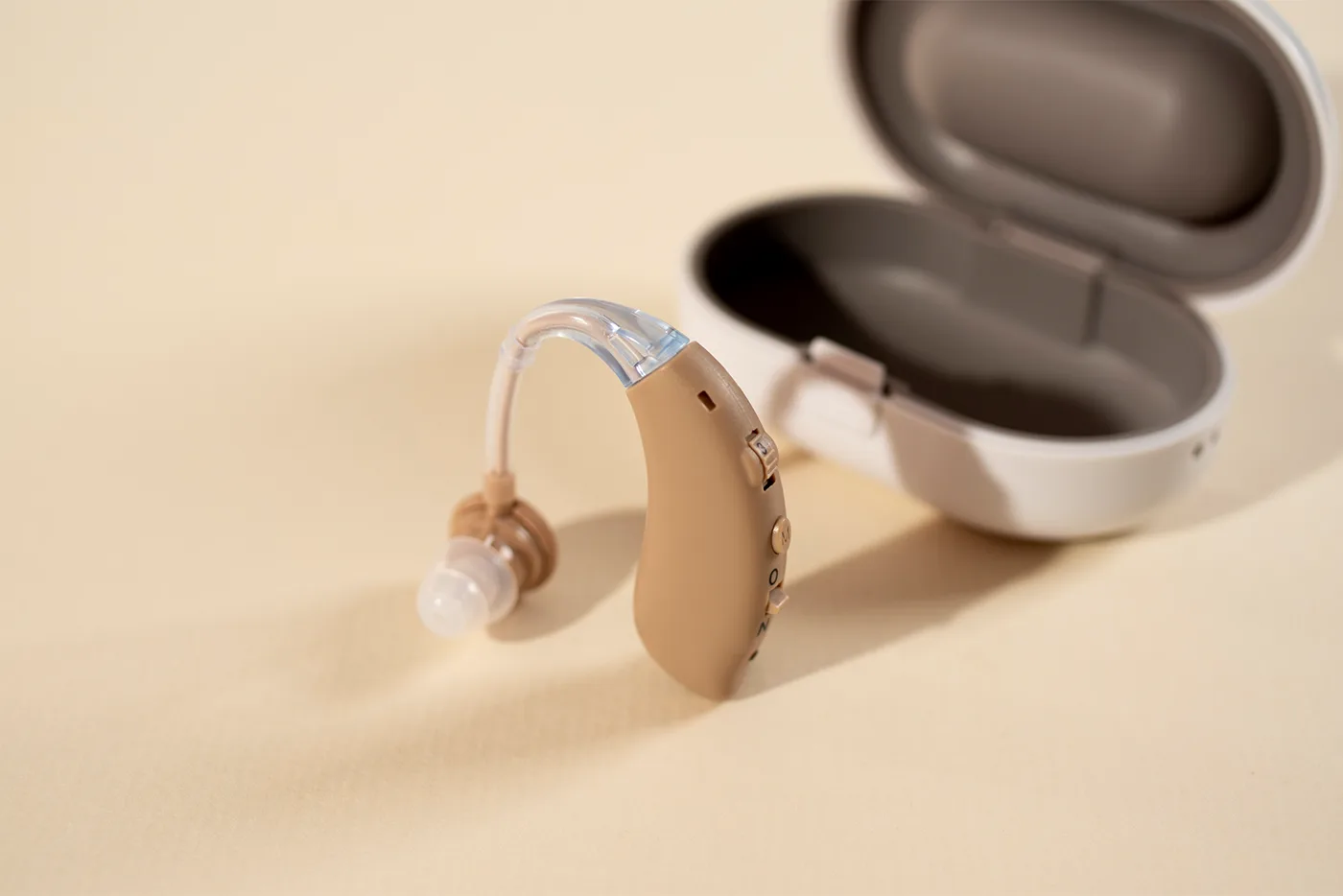
Instead of guessing your hearing level or using a random hearing aid, it is important to be evaluated by a qualified audiologist, as a poorly fitted hearing aid can do more harm than improve your hearing.
At 20dB Hearing, we provide a comprehensive hearing assessment using diagnostic tools to create an audiological profile. Following your evaluation, our audiologist guides you through a hearing aid trial and fitting, ensuring the aid fits your lifestyle and communication needs.
Whether you want to assess your child with hearing impairment or need hearing aids for the elderly in your home, we provide comprehensive assessments, personalized guidance, and professional support for every stage of life.
Take the first step today and schedule your consultation to improve your hearing health.