

When hearing loss becomes a safety issue
An audiologist explains how better hearing can help seniors stay aware of their surroundings, supporting confidence and independent living.
Most people recognise hearing loss through familiar signs: turning up the television volume or asking others to repeat themselves. Less obvious is the way hearing loss can affect situational awareness — the ability to detect and respond to sounds in the environment.
For older adults, not hearing sounds such as approaching vehicles or public transport announcements can make it harder for them to get around safely. That was the experience of 73-year-old Jacky Lim. Over time, the retiree realised his hearing had begun to fade, and that sounds he once took for granted were becoming harder to pick up.
“Sometimes I only realised things after others pointed them out,” he shares.
While the changes were subtle, they left him feeling less confident when he was out alone.
Supporting independent living
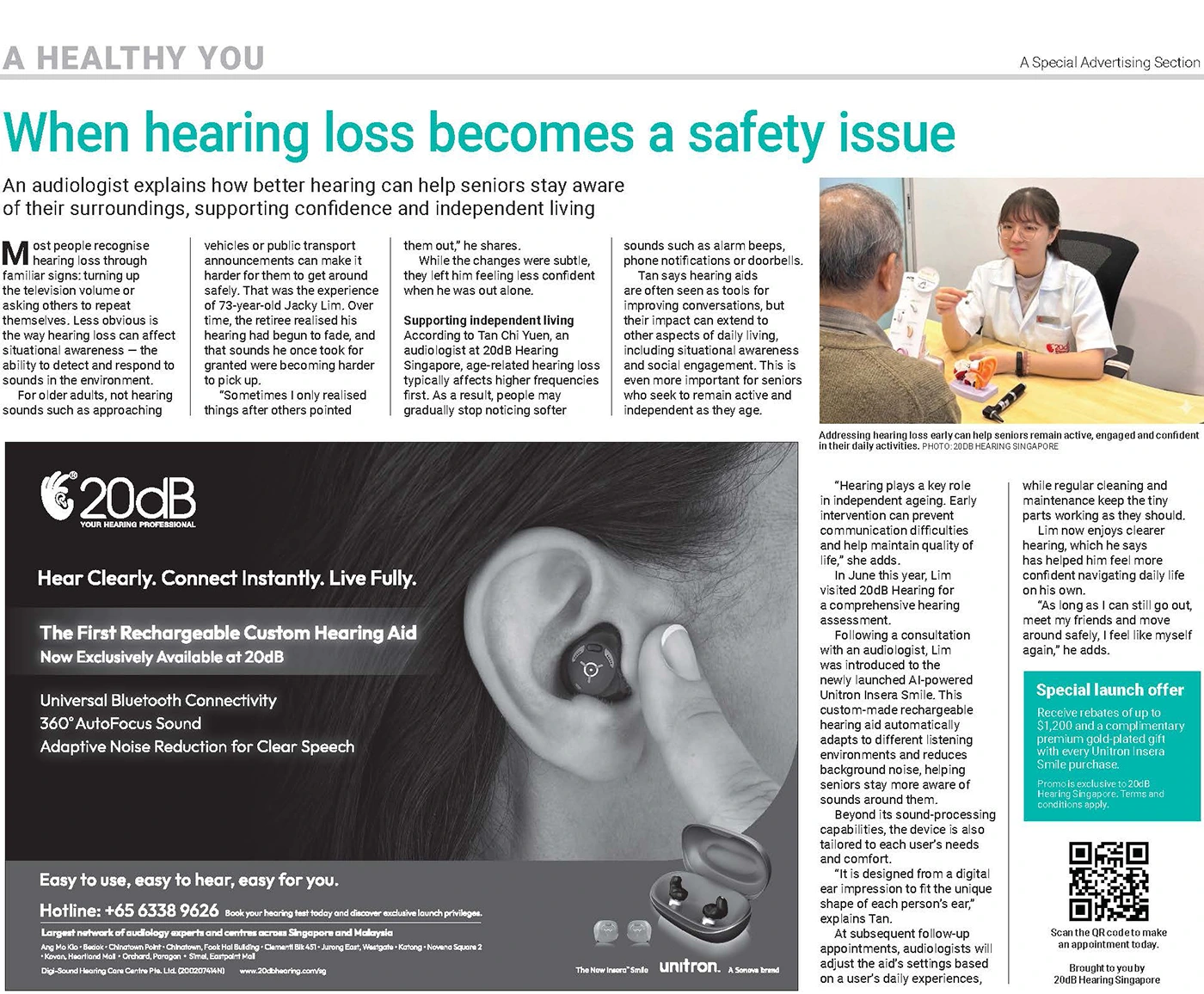
According to Tan Chi Yuen, an audiologist at 20dB Hearing Singapore, age-related hearing loss typically affects higher frequencies first. As a result, people may gradually stop noticing softer sounds such as alarm beeps, phone notifications or doorbells.
Tan says hearing aids are often seen as tools for improving conversations, but their impact can extend to other aspects of daily living, including situational awareness and social engagement. This is even more important for seniors who seek to remain active and independent as they age.
“Hearing plays a key role in independent ageing. Early intervention can prevent communication difficulties and help maintain quality of life,” she adds.
In June this year, Lim visited 20dB Hearing for a comprehensive hearing assessment.
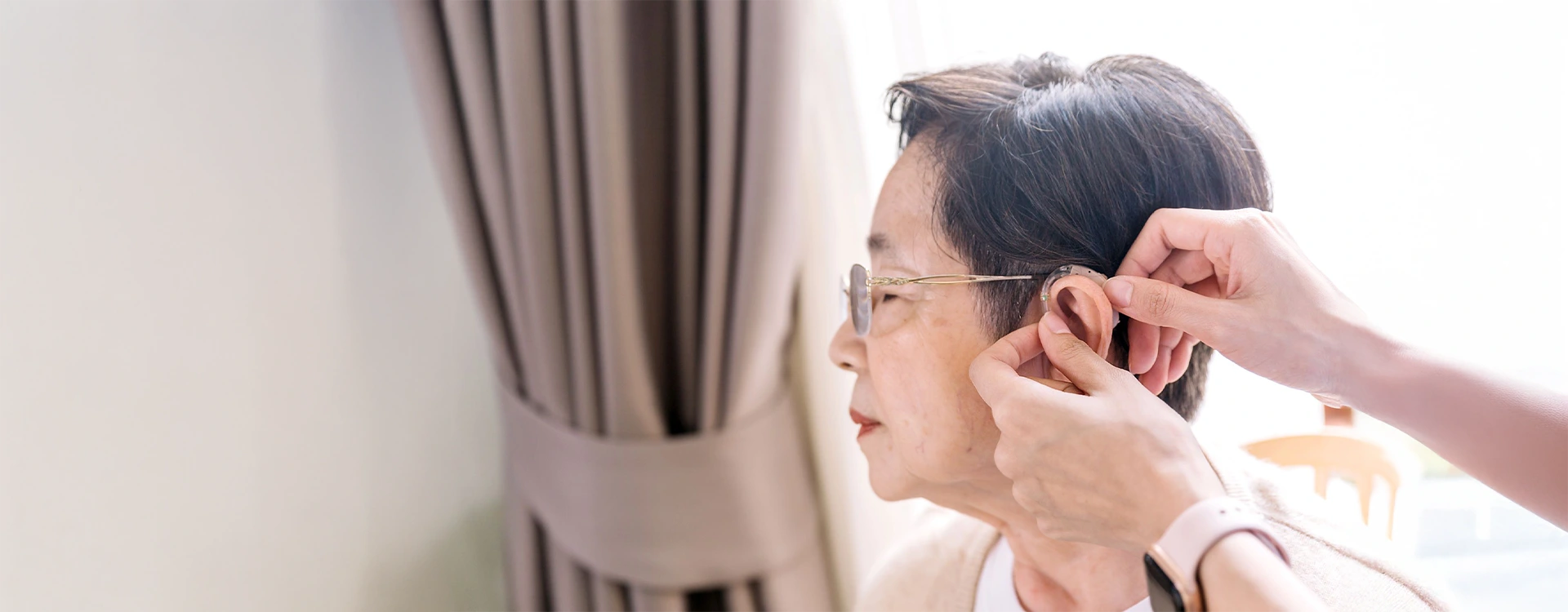
Following a consultation with an audiologist, Lim was introduced to the newly launched AI-powered Unitron Insera Smile. This custom-made rechargeable hearing aid automatically adapts to different listening environments and reduces background noise, helping seniors stay more aware of sounds around them.
Beyond its sound-processing capabilities, the device is also tailored to each user’s needs and comfort.
“It is designed from a digital ear impression to fit the unique shape of each person’s ear,” explains Tan.
At subsequent follow-up appointments, audiologists will adjust the aid’s settings based on a user’s daily experiences, while regular cleaning and maintenance keep the tiny parts working as they should.
Lim now enjoys clearer hearing, which he says has helped him feel more confident navigating daily life on his own.
“As long as I can still go out, meet my friends and move around safely, I feel like myself again,” he adds.
*This article is officially published on The Straits Times newspaper (8 July 2026).