

How Do Hearing Assessments in Malaysia Differ for Children and Adults?
.jpg)
Hearing tests are essential in detecting hearing loss and providing prompt treatment. The hearing assessment method in Malaysia is very different in children and adults because of the developmental and physiological differences between the two age groups. Although the general benchmark applied by both groups is the same, a 20dB Hearing threshold to categorize normal hearing, the procedures and processes are designed to meet the needs of each group. Now, we will explore the differences between hearing tests in Malaysia between children and adults.
Hearing Assessments for Adults
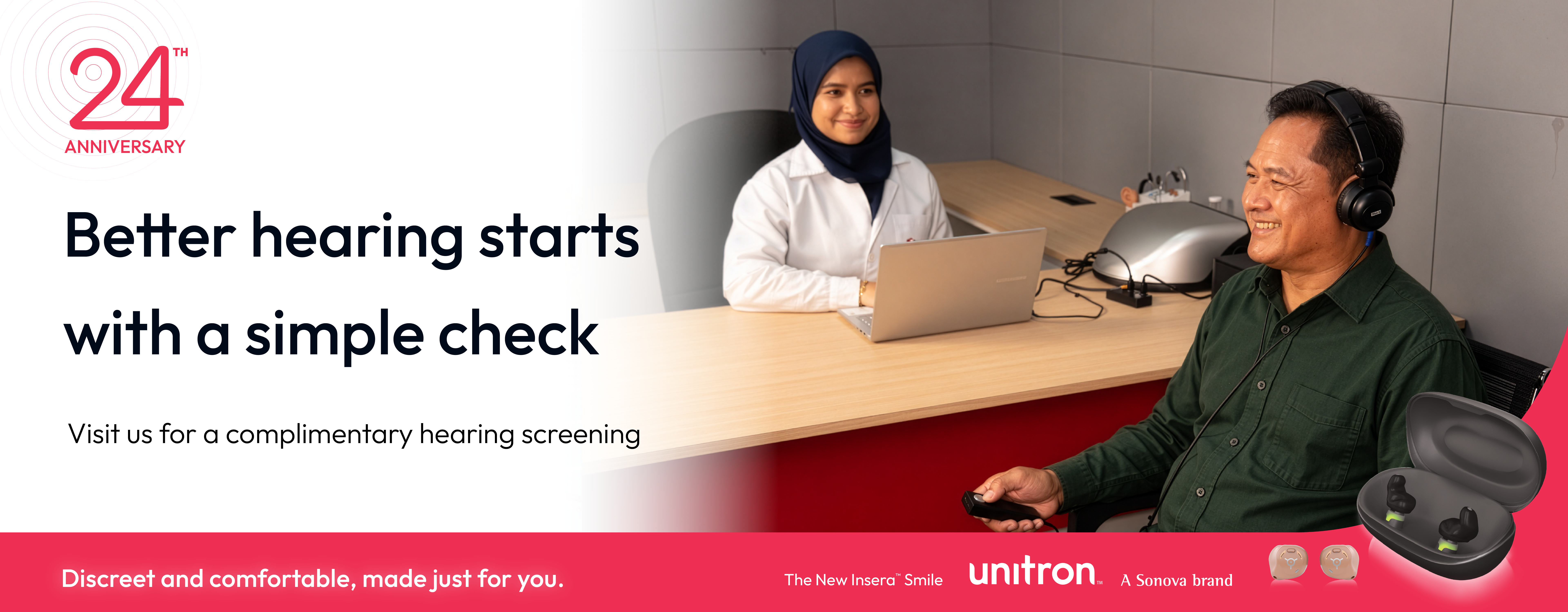
In the case of adults, hearing tests are mainly used to diagnose hearing loss, assess hearing acuity, and identify the correct treatment. Pure tone audiometry is the most prevalent test in the adult hearing assessment. In this test, the adults are put in headphones and asked to respond to different frequencies and intensities of sounds. The audiologist then identifies the hearing threshold, which is the lowest sound that the person can hear at a particular frequency. A hearing loss is usually indicated by a hearing threshold that is less than 20dB Heaing at any frequency.
Besides pure tone audiometry, speech audiometry is generally conducted. This test measures the ability of adults to comprehend spoken words, and it is also used to calculate the clarity of hearing. Another test that is commonly used is Tympanometry, which measures the response of ear pressure to determine the functionality of the middle ear. The test is used to detect problems like fluid in the middle ear that may interfere with hearing.
In adults, the hearing test process usually involves a discussion of their medical history, lifestyle, and any possible noise exposure that might have affected their hearing over the years. An adult hearing test is aimed at identifying the severity and the nature of hearing loss, whether mild, moderate, severe, or profound. These tests are carried out in sound-treated rooms to get the correct results.
Hearing Assessments for Children, Newborns, and Infants
Child hearing tests, particularly those of infants and newborn babies, are not conducted in the same way and methodology because of their developmental stages. Hearing screening of newborns is an essential aspect of early diagnosis because early intervention is crucial in facilitating speech, language, and cognitive development. Newborn hearing screening in Malaysia is a common practice as a national initiative. This usually includes non-invasive examinations such as Otoacoustic Emission (OAE) screening and Automated Auditory Brainstem Response (ABR) examinations.
OAE screening involves a small probe that is put into the ear of the infant and emits sound and measures the response of the ear. This test is used to identify any obstruction or injury to the inner ear.
ABR is a procedure where electrodes are put on the scalp of the baby to detect how the brain reacts to sound stimuli, and this enables audiologists to determine the hearing ability of the non-verbal patient.
These tests are conducted when the infant is asleep so that they feel as comfortable as possible. Early detection of hearing loss in newborns is critical to intervene, which should preferably be done at the age of six months to assist in the development of the child.
As infants develop into toddlers, the hearing tests can change to behavioral audiometry, where the audiologists can monitor the reaction of the child to particular sounds, such as toys or musical instruments. The tests are not verbal and therefore can be used with young children. Pediatric equipment is also used by the audiologists and is specific to the level of development of the child.
Differences in Assessment Methods for Adults and Children
The main distinction between adult and child hearing tests in Malaysia is the methodology and the instruments. In adults, the tests are more diagnostic, based on subjective responses to sounds and speech clarity. It is done by discussing the lifestyle and medical history to know the possible causes of hearing loss. Children, particularly newborns and infants, on the other hand, are subjected to more objective, non-verbal tests that are used to identify hearing loss without necessarily depending on the capacity of the child to respond verbally. This makes hearing loss easier to detect even before speech development starts.
For children, the goal is early detection and intervention, while for adults, the primary focus is on diagnosis, treatment planning, and understanding the degree of hearing loss. The use of newborn hearing screening in Malaysia protocols ensures that infants receive prompt testing, ideally before they reach three months of age.
Conclusion
To conclude, the hearing tests in Malaysia are age and development-specific. Adult hearing tests aim at diagnosing and determining the extent of hearing loss through pure tone audiometry, speech audiometry, and tympanometry. In the meantime, in the case of infant hearing tests and newborn hearing screening in Malaysia, the focus is on early detection using non-invasive, objective testing procedures, including OAE and ABR. Early detection and treatment are essential to children and infants, in particular, to aid their language and cognitive growth.
By knowing these differences, it is possible to make sure that every person gets the necessary hearing health care, whether it is early intervention or a specialized diagnostic treatment for adults. When you need a good hearing solution in Malaysia, whether for children or adults, the first thing you should do is to visit certified audiologists to ensure that you protect your hearing health.
For more information on audiometry test in Malaysia, be sure to check out 20dB Hearing's comprehensive services and professional testing options.