


Hearing Aid Prices in Malaysia (2026): What You'll Actually Pay
You wouldn't buy a car without knowing the price. So why do so many hearing aid shops make you guess?
You've probably searched "hearing aid price Malaysia" and hit a wall of vague answers. "Contact us for a quote." "Prices vary." "It depends."
Frustrating, right?
Here's the truth. Hearing aids in Malaysia range from around RM9,000 to over RM39,000 per pair. That's a massive gap. And without understanding why that gap exists, you're either overpaying or buying something that won't actually help you.
Let's fix that. This guide breaks down real price ranges, what's included (and what isn't), and how to figure out what you should actually spend.
Hearing aid price list by technology tier
Not all hearing aids are created equal. The biggest factor driving cost is the level of technology inside the device. Think of it like smartphones: a basic model makes calls, but a flagship handles everything from photography to AI.
Here's what hearing aid pricing in Malaysia looks like across different technology tiers:
| Technology Tier | Price Range (Per Pcs) | Best For |
|
Lower Essential |
RM4,500 – RM5,500 |
Quiet environments, home use, first-time users on a budget |
|
Essential |
RM5,500 – RM7,000 |
Everyday listening with some background noise, moderate lifestyle |
|
Standard |
RM8,000 – RM11,000 |
Mixed environments, social settings, Bluetooth connectivity |
|
Advanced |
RM13,000 – RM16,000 |
Active lifestyles, noisier environments, rechargeable convenience |
|
Premium |
RM18,000 – RM21,000 |
Noisy environments, professionals, music lovers, tinnitus support |
A few things to note:
-
Prices are per pcs. Some clinics quote per ear, which can be misleading. Always confirm.
-
Basic doesn't mean bad. For someone who mostly stays home and watches TV, a basic hearing aid fitted properly can be life-changing.
-
Premium doesn't mean unnecessary. If you're still working, attending meetings, or eating out regularly, advanced noise processing isn't a luxury, it's a need.
The style of the hearing aid also affects price, though the bigger factor is whether it's custom-made. At the same technology tier, standard styles like behind-the-ear (BTE) and receiver-in-canal (RIC) devices tend to cost less than custom-built styles like completely-in-canal (CIC) and invisible-in-canal (IIC), which are individually molded to fit your ear canal.
What's actually included in the price
This is where most people get tripped up.
A hearing aid isn't just a device you put in your ear. It's a regulated medical device that needs to be programmed to your specific hearing loss by a trained audiologist, and that professional programming (along with ongoing support) is part of what you're paying for.
Here's what a reputable clinic typically includes:
-
Comprehensive hearing assessment before fitting
-
Custom programming based on your audiogram
-
Follow-up adjustments (usually 3–6 sessions in the first year)
-
Warranty covering repairs and manufacturing defects (1–3 years depending on the brand)
-
Aftercare like cleaning, maintenance checks, and counseling on use
Some clinics also bundle trial periods, giving you time to wear the hearing aids in your daily life before fully committing.
Now, here's the catch. Not every clinic bundles the same things. Some advertise a lower upfront price but charge separately for fitting, follow-ups, or even the hearing test itself. According to the Malaysian Ministry of Health's guidelines on hearing healthcare services, audiological assessments should be conducted by qualified professionals: so make sure your "bundled" services include proper clinical testing, not just a quick screening.
Always ask: "What's included in this price?" It's the single most important question you can ask before buying.
Why hearing aids cost what they do
Let's address the elephant in the room. Why are hearing aids so expensive compared to, say, Bluetooth earbuds?
It's a fair question. And the answer comes down to three things.
First, research and development. Major manufacturers like Phonak and Unitron invest hundreds of millions into R&D every year. Modern hearing aids contain sophisticated digital signal processors that can isolate speech from background noise, adjust automatically across environments, and even connect to your smartphone. As the Hearing Industries Association notes, today's hearing aids are essentially miniaturized computers running complex algorithms in real time.
Second, customization. Unlike earbuds that come in standard sizes, hearing aids are programmed specifically for your hearing profile. No two ears are the same. The audiologist's expertise in fitting and fine-tuning is a significant part of what you're paying for.
Third, ongoing care. That price tag covers years of follow-up visits. Your hearing changes over time. Your hearing aids need to be adjusted accordingly, and aural rehabilitation to help you adapt to hearing with your devices is part of those follow-up visits. This long-term relationship with your audiologist is baked into the cost.
Does that mean every expensive hearing aid is worth it? No. But it does mean that suspiciously cheap options (especially those sold online without any professional fitting) often end up costing more in the long run. They sit in drawers, unused, because they were never properly programmed to begin with.
The cost-per-day reframe
Here's a perspective shift that changes how most people feel about hearing aid prices.
Let's say you buy a mid-range pair for RM13,000. The average lifespan of a modern hearing aid is about 5 years. That's 1,825 days.
RM13,000 ÷ 1,825 days = RM7.12 per day.
That's less than your morning kopi and nasi lemak.
For premium hearing aids at RM39,000, you're looking at roughly RM21.37 per day. Still less than a Grab ride across town.
|
Price Paid (Per Pair) |
Lifespan |
Daily Cost |
|
RM9,000 |
5 years |
RM4.93 |
|
RM13,000 |
5 years |
RM7.12 |
|
RM19,000 |
5 years |
RM10.41 |
|
RM29,000 |
5 years |
RM15.89 |
|
RM39,000 |
5 years |
RM21.37 |
When you frame it this way, the question changes. It's no longer "Can I afford hearing aids?" It becomes "Can I afford to keep missing conversations with the people I love?"
Many clinics in Malaysia also offer installment plans or interest-free payment options to make the investment more manageable. Some employers and insurance policies cover hearing aids too. It's worth checking before you assume you'll pay entirely out of pocket.
How to find the right hearing aid at the right price
The cheapest hearing aid in Malaysia isn't the best deal. Neither is the most expensive one. The best deal is the one that matches your hearing loss, your lifestyle, and your budget: fitted by someone who knows what they're doing.
Here's how to approach it:
-
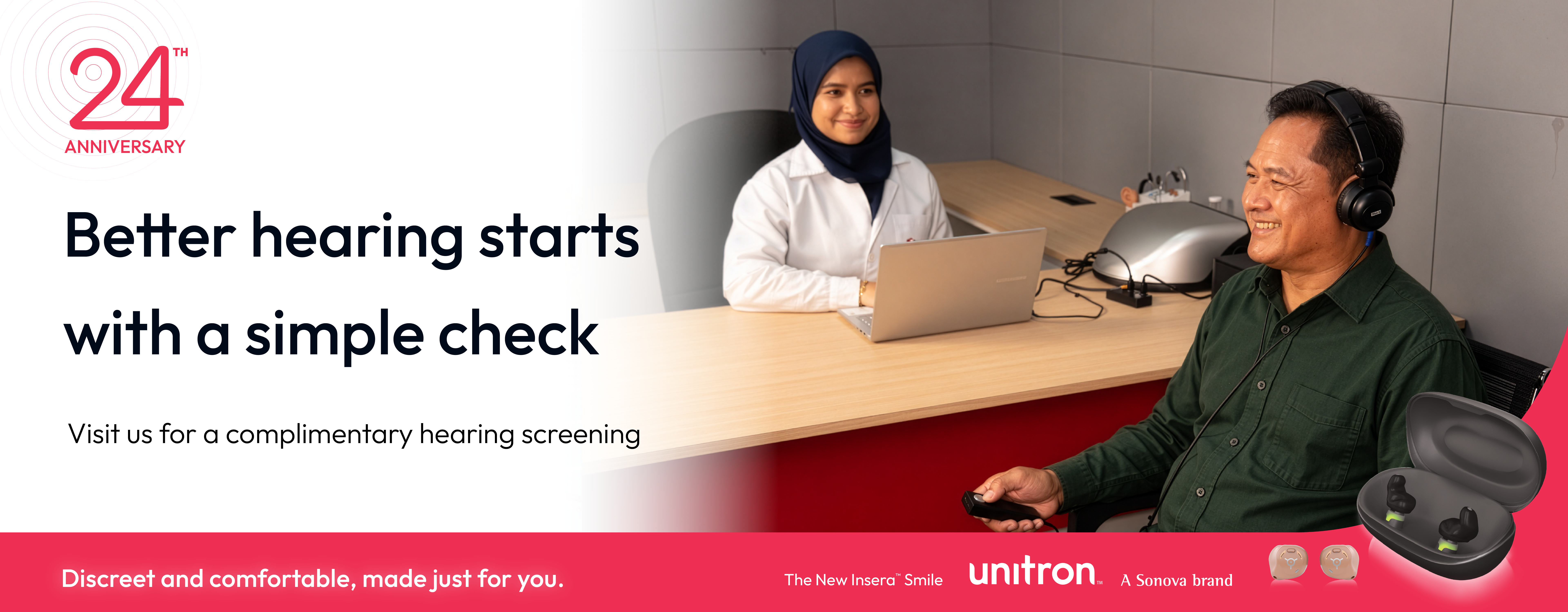
Start with a proper hearing test. Everything else is guesswork without one. An audiologist will map out exactly what frequencies you're missing and how severe the loss is.
-
Be honest about your lifestyle. Tell your audiologist where you struggle most. Meetings? Family dinners? Watching TV? This determines the technology tier you actually need.
-
Ask about the total cost. Get clarity on what's bundled. Ask about warranty terms, follow-up sessions, and what happens if the device needs repair after warranty.
-
Don't buy online without professional fitting. A hearing aid that isn't properly programmed is an expensive paperweight. The World Health Organization emphasizes that appropriate fitting and follow-up are essential for successful hearing aid use.
-
Ask about trial periods. Wearing hearing aids in a sound booth is one thing. Wearing them at a noisy kopitiam is another. A trial period lets you test them in your real life.
The best place to start isn't a price list. It's a hearing test.
Once you know exactly what your ears need, everything else (the style, the technology tier, the price), falls into place. Without that baseline, you're shopping blind.
At 20dB Hearing, every hearing aid purchase begins with a comprehensive hearing test by a certified audiologist. No hard sell. No pressure. Just an honest assessment of your hearing, followed by a transparent recommendation that fits your ears and your budget.
If you've been putting it off because you didn't know what to expect price-wise, now you do. The next step is finding out what your ears actually need.
Book your hearing assessment with 20dB Hearing today, and get a transparent quote based on your actual hearing profile. No guesswork. No surprises.