


Employer's Guide to Industrial Audiometric Testing (DOSH)
.png)
Employer's guide to industrial audiometric testing in Malaysia
Your factory floor is loud. You know it. Your workers know it.
But here's what most employers don't know: if your workers are exposed to noise levels above 85 decibels for 8 hours, you are legally required to provide them with audiometric testing. Not as a nice-to-have. As law.
And the penalty for ignoring this? Up to RM10,000 in fines or one year's imprisonment. Or both, under the Occupational Safety and Health (Noise Exposure) Regulations 2019.
That's not a typo.
Malaysia's occupational noise regulations have real teeth. Yet many employers (especially in manufacturing, construction, and oil & gas) still treat industrial audiometric testing as an afterthought. Some don't even know the requirement exists.
This guide breaks down exactly what you need to do, when you need to do it, and how to make sure your company stays compliant without the headache.
What the law actually says
The key legislation you need to know is the Occupational Safety and Health (Noise Exposure) Regulations 2019, enforced by the Department of Occupational Safety and Health (DOSH). It replaced the older Factories and Machinery (Noise Exposure) Regulations 1989 and tightened several requirements.
Here's the short version:
- The Malaysian Noise Exposure Limit is 85 dB(A) for an 8-hour working day, corresponding to 100% daily personal noise dose.
- Any employer whose workers are exposed at or above this limit must implement a Hearing Conservation Programme (HCP)
- Audiometric testing is a mandatory component of that programme
- A competent person (meaning a certified audiologist or occupational health doctor) must conduct the tests
The regulations are clear about this. DOSH doesn't leave much room for interpretation. If your workplace noise exposure equals or exceeds the permissible limit, you must act. The full text of the regulations is available through DOSH's official legislation page.
It's not just about testing, either. The HCP requires noise monitoring, engineering controls, personal protective equipment, worker education, and record-keeping. But audiometric testing is the piece that catches most employers off guard: because it involves scheduling, logistics, and certified professionals.
Baseline vs annual audiometric tests
There are two types of audiometric tests your workers need. They sound similar but serve very different purposes.
Baseline audiometric test
This is the first test. It records a worker's hearing ability before or within the first few months of noise exposure on the job. Think of it as a "before" photo of their hearing. Every worker exposed to hazardous noise levels needs one.
The baseline test must happen within the first month of a worker's assignment to a noisy work area. If you hire someone in January and put them on the factory floor, their baseline test must be done no later than February.
Annual audiometric test
Once the baseline is recorded, you're required to conduct follow-up testing every year. The annual test compares current hearing levels against the baseline. This is how you detect hearing loss early: before it becomes permanent and before a worker files a compensation claim.
Here's a quick comparison:
| Baseline audiometric test | Annual audiometric test | |
|---|---|---|
| When | Within first month of noise exposure | Every 12 months after baseline |
| Purpose | Establish reference hearing level | Detect changes from baseline |
| Who needs it | All new workers in noisy areas | All workers with existing baselines |
| Done by | Certified audiologist / OHD (test may be performed by a trained audiometric technician) | Certified audiologist / OHD (test may be performed by a trained audiometric technician) |
If an annual test shows a Standard Threshold Shift (meaning a worker's hearing has dropped by 10 dB or more on average at certain frequencies), the worker should be retest to confirm the result. If confirmed, the employer must take action. That could mean reassigning the worker, improving noise controls, or ensuring proper use of hearing protection.
Skipping annual tests doesn't just put you at legal risk. It puts you in a position where a worker's hearing deteriorates silently for years, and by the time anyone notices, the damage is irreversible. Noise-induced hearing loss doesn't heal. As the World Health Organization's fact sheet on deafness makes clear, prolonged occupational noise exposure is one of the leading preventable causes of hearing loss worldwide.
Who must be tested (and who's at risk)
Not every employee in your company needs an audiometric test. The requirement applies specifically to workers whose noise exposure meets or exceeds the 85 dB(A) threshold.
But which industries typically hit that number? More than you'd think:
-
Manufacturing: stamping machines, grinders, compressors
-
Construction: pile driving, jackhammering, heavy equipment
-
Oil & gas: drilling operations, pump stations
-
Plantation & agriculture: chainsaws, processing mills
-
Aviation & transport: ground crew, engine maintenance
To know for sure, you need a noise risk assessment conducted at your workplace. This involves measuring actual decibel levels at different workstations using calibrated sound level meters. The assessment tells you which zones exceed the limit and which workers need to be enrolled in the Hearing Conservation Programme.
Here's a practical reference point. A normal conversation sits at about 60 dB. A lawnmower runs at roughly 90 dB. A chainsaw hits about 110 dB. If your workers need to shout to be heard from an arm's length away, you're almost certainly above 85 dB.
Don't guess. Measure.
The real cost of non-compliance
Let's talk money. Because that's usually what gets boardroom attention.
But fines are just the obvious cost. The hidden costs are bigger.
Workers' compensation claims. If a worker develops noise-induced hearing loss and you have no audiometric records to show you took precautions, you're exposed. SOCSO claims, legal fees, and settlement costs add up fast.
Productivity loss. Workers with untreated hearing loss make more errors, have more accidents, and communicate poorly on the job. In high-risk environments, that's dangerous.
Reputation damage. DOSH audits and enforcement actions become part of your company's safety record. That record matters when you're bidding for contracts, especially with multinationals and government agencies that require safety compliance from their vendors.
One factory audit with a finding of "no audiometric testing programme" can cost you a contract worth far more than the testing would have cost in the first place.
How industrial audiometric testing works
This is the part most HR and safety managers worry about, the logistics.
Good news: testing doesn't have to disrupt your entire operation. Workers are scheduled in batches at 20dB Hearing's clinic to minimise time away from the job. Here's what the process typically looks like:
-
Appointment scheduling: The clinic coordinates with your safety team to book testing slots for your workers, usually across one or multiple days depending on headcount
-
Sound-treated testing: Each worker is tested in a calibrated, sound-treated booth at the clinic to ensure accurate results
-
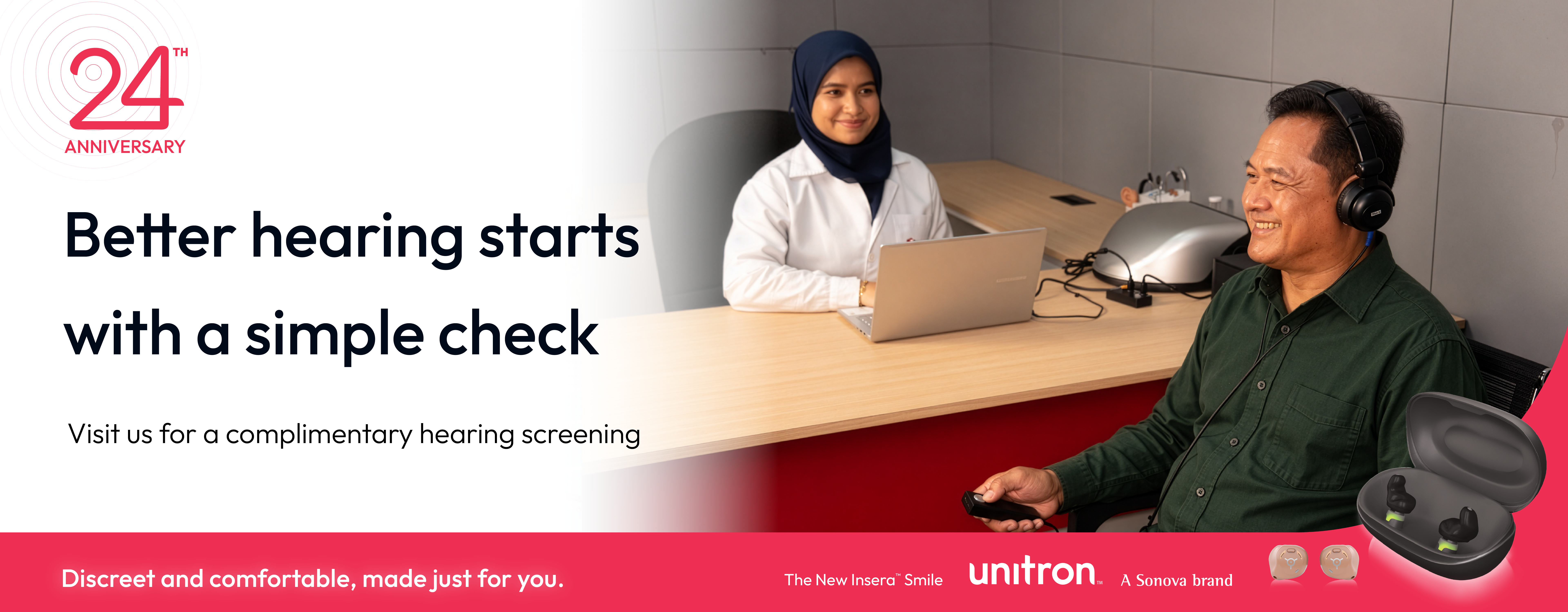
Worker screening: Each worker undergoes a pure-tone audiometric test, typically taking 15–20 minutes per person
-
Results and reporting: The provider compiles individual and summary reports, flags any threshold shifts, and advises on follow-up actions
-
Record-keeping: All results are documented for your HCP files and DOSH compliance records
The key is working with a provider who uses a certified audiologist, audiometric technician, or Occupational Health Doctor (OHD), with calibrated equipment. Results from uncertified personnel or poorly maintained equipment won't hold up during a DOSH audit.
Most companies find that scheduling annual testing during a quieter production period (or splitting it across shifts) minimises disruption. It's far less painful than it sounds once you've done it the first time.
If you've read this far, you probably have workers who need testing: either for the first time or because the annual cycle is coming up.
20dB Hearing provides industrial audiometry services for employers across Malaysia, conducted by certified audiologists at their clinic. Whether you need baseline testing for new hires or annual screening for your entire workforce, they handle the scheduling, testing, reporting, and compliance documentation.
Don't wait for a DOSH audit to find out you're not compliant. Get in touch with 20dB Hearing's industrial audiometry team to schedule your workers' testing and stay ahead of your DOSH compliance requirements.