



Hearing Aid Trials in Malaysia: Try Before You Buy
A hearing aid isn't a pair of sunglasses. You can't just pick one off the shelf, try it on, and know it works. It sits inside your ear. It rewires how your brain processes sound. It is a medical device. And it costs real money.
So why would anyone buy one without testing it first?
More Malaysians are asking exactly that question, and it's a smart one. Committing thousands of ringgit to a device you've never worn in your own life, whether at your own mamak, in your own office, or on your own morning walk, is a gamble nobody should have to take.
You don't have to.
How hearing aid trials actually work at 20dB Hearing
A hearing aid trial is exactly what it sounds like. You get to wear the device in your real life before you pay for it. The trial happens in your world for days, not in a quiet clinic room for five minutes.
This is how the process works at 20dB Hearing:
-
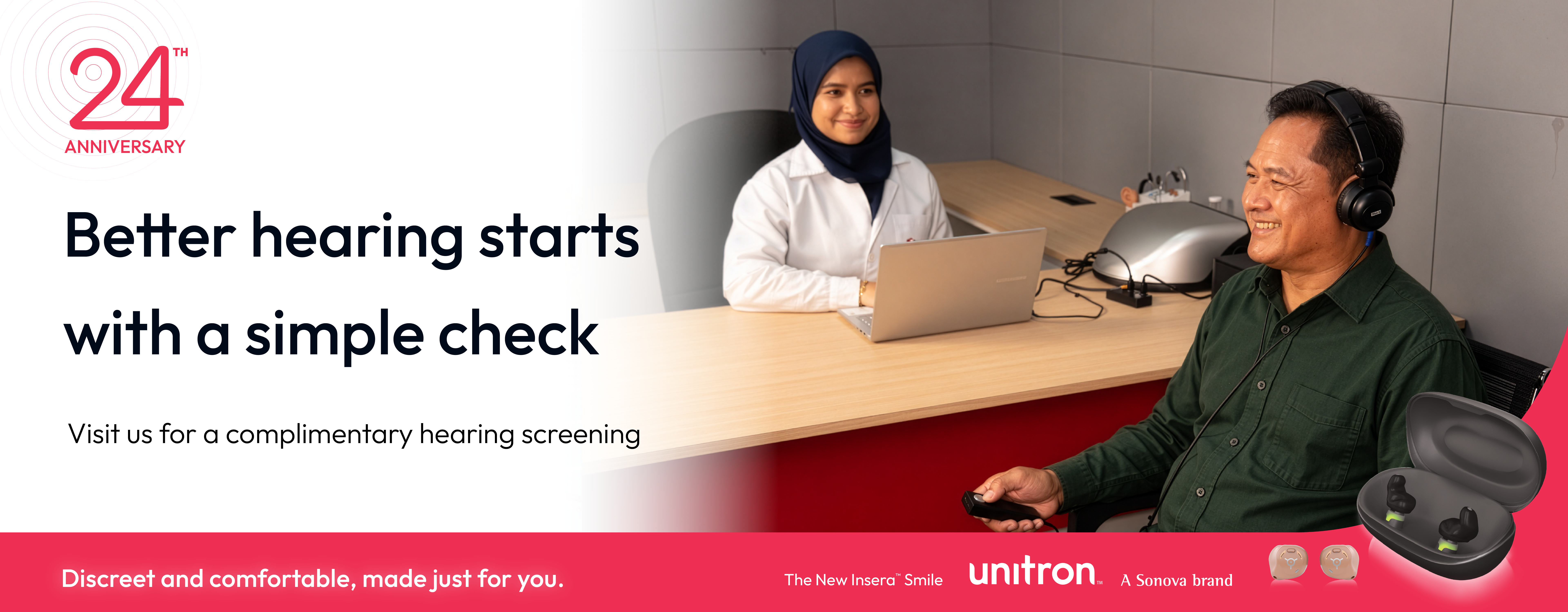
Step 1: A proper hearing assessment. Before anyone puts anything in your ear, a certified audiologist maps out your specific hearing profile. It's a full diagnostic test rather than a basic screening, and it shows exactly which frequencies you struggle with and how much.
-
Step 2: Device selection. Based on your results, lifestyle, and budget, the audiologist recommends suitable hearing aids. The aim is the most appropriate one, not the most expensive.
-
Step 3: Fitting and programming. The device is programmed to your unique audiogram. This is where the magic happens, and the next sections cover it in more detail.
-
Step 4: You take it home. You wear it to work and to dinner, and you test it where it matters.
The trial period lets you experience what hearing aid technology actually does for you before any long-term commitment. It removes the biggest barrier risk-averse buyers face: what if it doesn't work for me?
What to expect the first time you wear hearing aids
The first time you put on a hearing aid, it will feel weird.
Your own voice may sound strange, louder or like you're talking inside a barrel. Background noises you haven't heard in years suddenly appear, like the hum of the air conditioner, the rustle of your shirt, and the sound of your own chewing.
All of this is normal.
Your brain has been compensating for hearing loss, sometimes for years. According to the American Speech-Language-Hearing Association (ASHA), it can take weeks to months for your brain to adjust to amplified sound. The neural pathways responsible for processing those missing frequencies need time to wake up.
During the first few days, expect the following:
-
Sensory overload is real. Everything sounds louder than expected. This settles down as your brain recalibrates.
-
Speech clarity improves gradually. You might not understand every word immediately, especially in noisy environments. Give it time.
-
Physical sensation takes adjustment. The device in your ear feels foreign at first. Most people stop noticing it within a week.
This is why a trial period matters so much. That initial weirdness can scare people into thinking the device doesn't work. A trial gives you the runway to push through the adjustment phase and reach the breakthrough on the other side.
What to test during your trial (hint: leave the clinic)
Most people get this wrong. They test their hearing aids in quiet rooms and decide it works. That tells you almost nothing.
Real life isn't quiet, and Malaysia certainly isn't.
During your trial period, deliberately put yourself in challenging listening environments. Test the device where you actually struggle:
|
Environment |
What you're testing |
|
Hawker centre or food court |
Speech in heavy background noise |
|
Office meetings |
Following conversation with multiple speakers |
|
Car with windows down |
Wind noise management |
|
Phone calls |
Bluetooth connectivity and voice clarity |
|
Mosque, temple, or church |
Echoing spaces with distant speakers |
|
Watching TV at home |
Whether you can finally lower the volume |
Keep a simple journal. Write down what worked and what didn't. When you return for your follow-up appointment, this feedback is gold. Your audiologist can fine-tune the programming based on your real-world experience, not guesswork.
The fitting process: why programming matters more than the brand
Most people obsess over hearing aid brands such as Phonak and Unitron . They compare specs the way they'd compare phones.
Audiologists know what most consumers don't: the fitting matters more than the device.
A RM10,000 hearing aid fitted poorly will perform worse than a RM4,000 one fitted well. The World Health Organization's World Report on Hearing emphasizes that proper verification, using real-ear measurements, is critical to ensuring the device actually delivers the right amount of amplification at the right frequencies.
At 20dB Hearing, the hearing aid fitting process includes:
-
Real-ear measurement (REM). A tiny microphone placed in your ear canal measures what the hearing aid is actually delivering, compared to what it should deliver based on your audiogram. This is the gold standard of fitting verification. REM is available at selected branches, so ask whether your branch offers it.
-
Speech mapping. Your audiologist verifies that speech sounds are audible and comfortable across different volume levels.
-
Iterative adjustments. After your trial, the device is reprogrammed based on your feedback from real-world use.
The National Institute on Deafness and Other Communication Disorders (NIDCD) covers this same fitting and verification process in plain language if you want a second, independent explanation.
This is also why buying hearing aids online or from non-audiologist retailers is risky. Without proper fitting, you're essentially wearing an expensive amplifier, and amplifying everything equally — including noise, isn't the same as restoring hearing.
Warranty and after-sale support in Malaysia
Even after a successful trial, you want to know you're covered.
Hearing aid warranties in Malaysia vary by manufacturer and provider. At 20dB Hearing, devices typically come with:
-
Manufacturer warranty covering defects and repairs (duration varies by model, usually 1–3 years)
-
Follow-up fitting appointments to refine programming as your ears and brain adjust over months
-
Ongoing audiological support so you're never left figuring things out alone
This matters more than people think, because a hearing aid isn't a one-and-done purchase. Your hearing can change over time, the device needs recalibration, and parts wear out. Follow-up and aural rehabilitation sessions are needed from time to time to address the changes.
Ask about warranty terms during your trial appointment. Know what's covered, for how long, and what the process looks like if something goes wrong. A reputable provider will answer these questions without flinching.
The smart move is the cautious one
Being cautious with your money is wise, not difficult. A hearing aid trial exists for people who want proof before commitment, and those are the consumers who tend to end up happiest with their purchase.
You test the device in your own life, get a fitting based on science instead of salesmanship, and receive warranty coverage that protects your investment afterwards.
If you've been putting off hearing aids because you're not sure they'll work for you, a trial takes much of that uncertainty out of the decision.
Book a hearing assessment with a certified audiologist at 20dB Hearing. It's the first step toward a trial that lets your ears (and your ringgit) make the decision with zero pressure.